The Sea Doesn’t Care About Our Narratives
Right now, when people talk about the Black Sea, the conversation is often dominated by war, drones, security incidents, and geopolitical tension. And yes - those concerns are real.
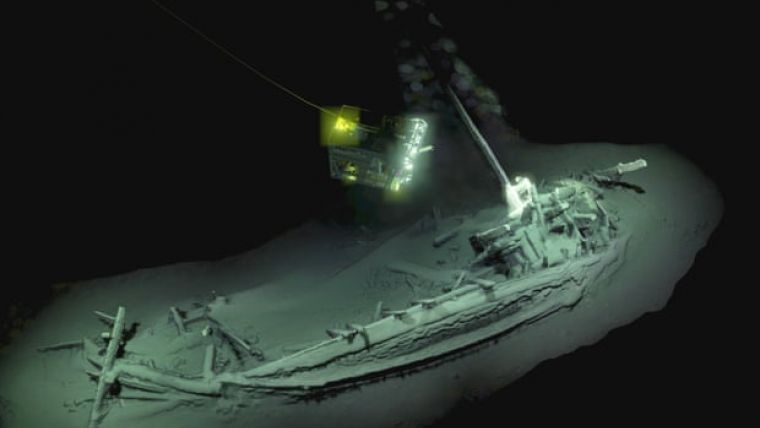
But beneath all of that noise sits an older truth: the Black Sea has always been far more than a battlefield. It is one of the most mysterious underwater environments in the world — a place where entire ships from ancient civilizations can remain preserved, where layers of water and low-oxygen depths create something close to a time capsule.
The world has already been stunned more than once by discoveries in these waters. And yet, somehow, we are still barely looking.
A Sea That Keeps Its Secrets
The Black Sea is unique because its deeper layers preserve what many other seas would already have destroyed. In such conditions, wood, ropes, hull forms, and other fragile remains can survive for astonishingly long periods of time.
That means every new underwater expedition is not just a scan of the seabed. It can be a glance into another century — or several of them at once.
And that leads to a simple but powerful conclusion: what has already been found is likely only a fraction of what is still there.
And Then There is Varna
Let’s bring this closer to home.
Near Varna, Bulgaria, archaeologists uncovered what is widely regarded as the oldest processed gold ever discovered. That is not just an impressive historical fact. It is a signal.
- • Advanced societies once lived and traded along this coast
- • Wealth moved through these maritime routes
- • The shoreline was never merely local - it was connected
- • And inevitably, across centuries, some things were lost
If precious materials were processed on land near Varna, what passed through its waters? What sank? What was buried? What still waits just beneath the sand?
Anyone familiar with the coast knows the seabed is not static. The sand moves. It covers. It reveals. It hides. And sometimes - it gives back.
ORCAPTOR Starts With Defence… But It Doesn’t End There
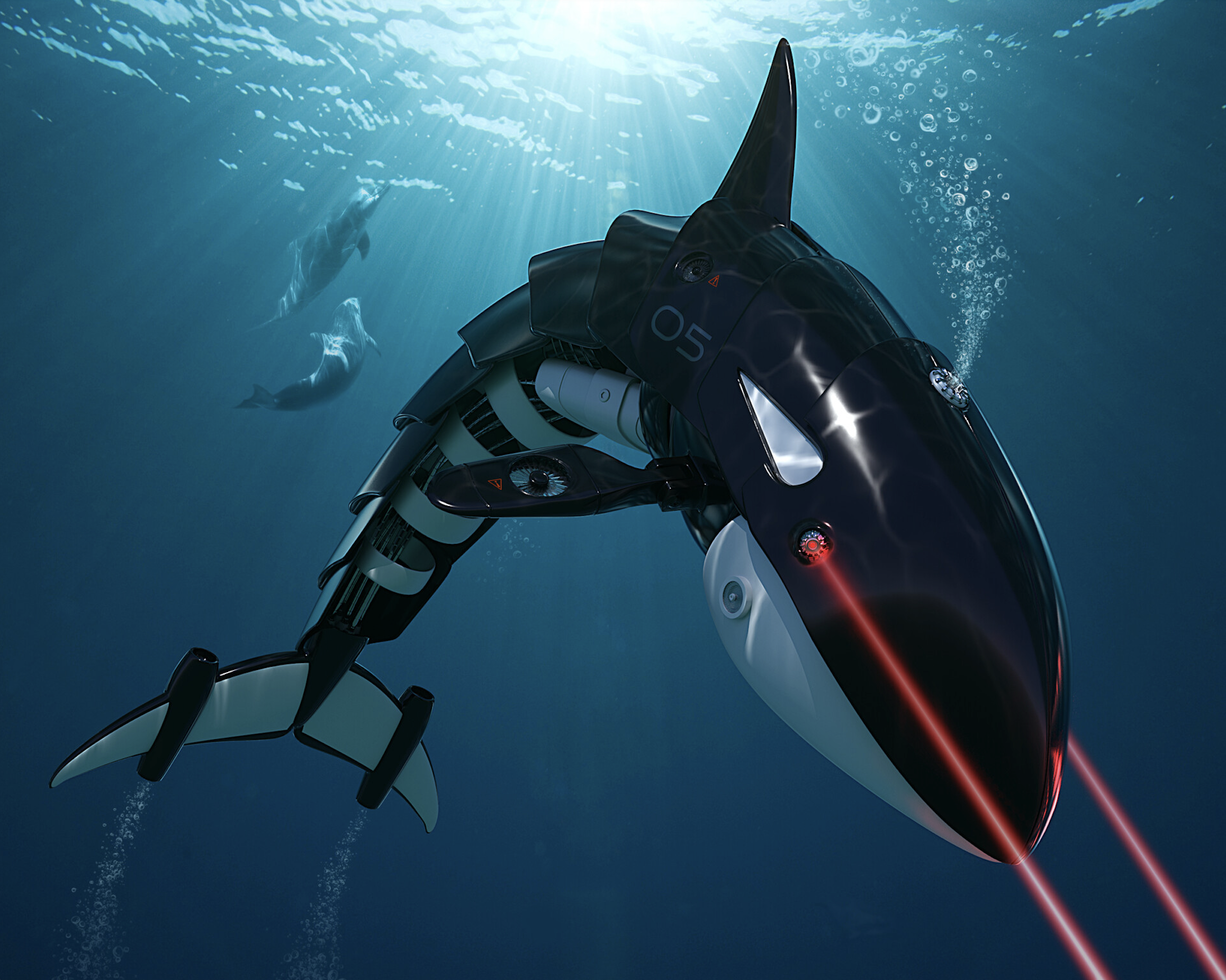
On paper, ORCAPTOR begins as a defence-driven concept: a coordinated system of autonomous underwater vehicles designed for persistent surveillance, infrastructure protection, and resilient maritime operations in complex near-coast environments.
- • Patrol coastlines with endurance and discretion
- • Protect critical seabed infrastructure and maritime approaches
- • Operate with hybrid propulsion and low observability
- • Coordinate through AI-driven swarm behaviours
- • Adapt through modular payload architecture for different missions
That is the technical story - and it matters. ORCAPTOR brings together hybrid energy, swarm autonomy, underwater communications, modularity, and low-observability into one scalable architecture for defence and civil maritime applications.
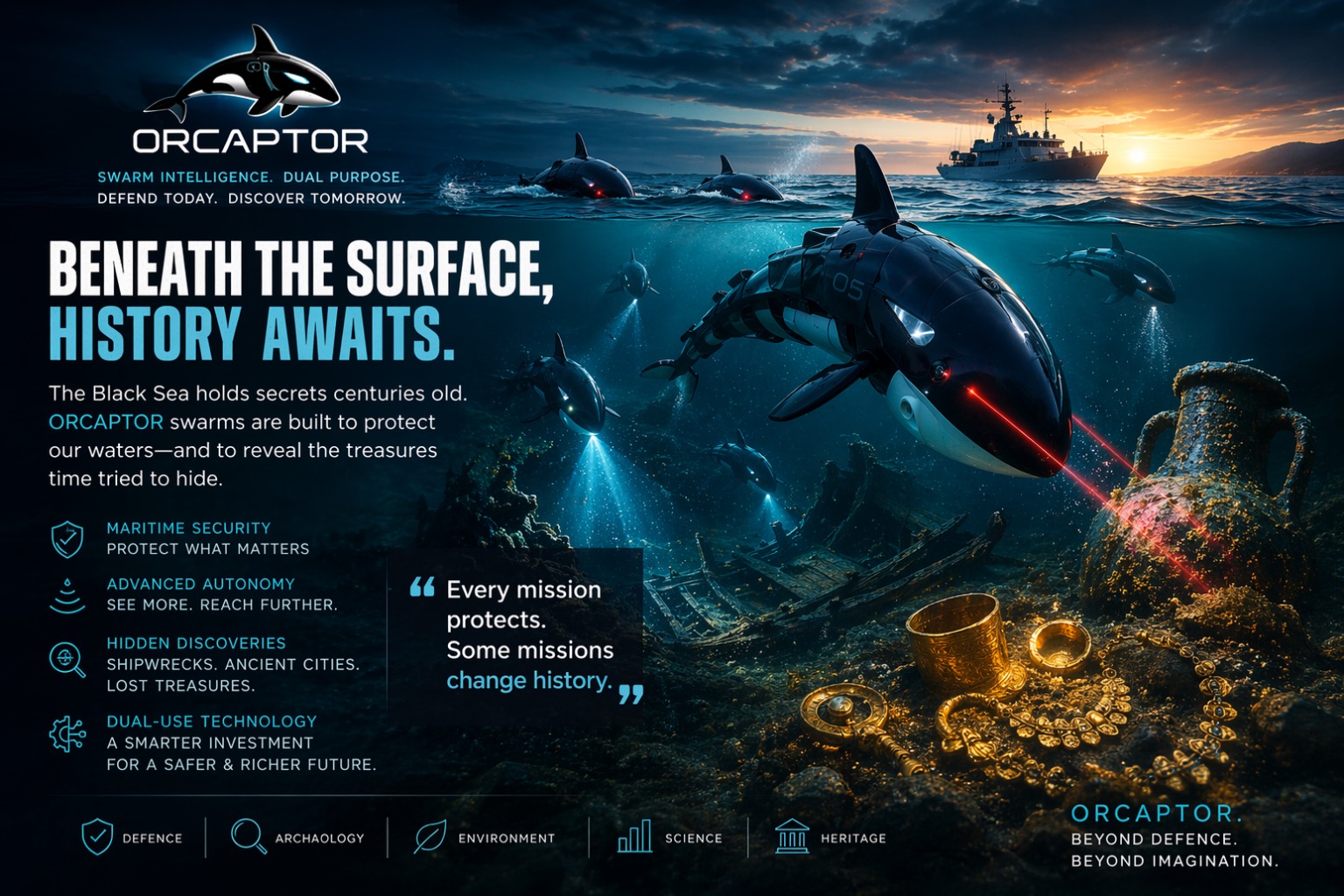
But the bigger story is this: ORCAPTOR is designed as a dual-use system. Which means that everything it can do for defence, it can also do for discovery.
Swarm Intelligence Meets Seabed Exploration
Imagine not one vehicle, but many - moving with purpose, sharing tasks, adapting to conditions, and scanning large areas far more efficiently than a single platform ever could.
In the ORCAPTOR concept, that means cooperative search patterns, adaptive mission planning, resilient underwater communication, modular payload options, and distributed autonomy.
Now take those same capabilities and apply them not only to patrol and security, but also to:
- • Mapping unknown seabed areas
- • Locating shipwrecks and scattered remains
- • Detecting buried structures or unusual seabed patterns
- • Scanning shallow coastal zones where the sand shifts constantly
Suddenly, ORCAPTOR is no longer just a tool for maritime awareness. It becomes a system that can systematically explore the unknown.
Accidental Discoveries Are Not Really Accidental
Here is where things get genuinely interesting.
ORCAPTOR does not need to be deployed specifically for archaeology in order to reveal archaeology. It simply needs to operate.
During patrol missions, inspections of underwater infrastructure, or environmental monitoring, the system will collect data. And in that data, inevitably, there will sometimes be:
- • unusual shapes
- • anomalies
- • patterns that do not belong
- • objects that deserve a second look
History has taught us a simple lesson: some of the biggest discoveries are made while looking for something else.
But What if We Stayed Below the Surface?
The Black Sea has already surprised the world with preserved ships, forgotten trade traces, and evidence that its underwater story is far from complete.
And yet, attention almost always drifts back upward - to headlines, to immediate threats, to what is happening on the surface.
But what if, instead of occasionally reacting to discoveries, we started enabling them continuously? That is the deeper promise of ORCAPTOR beyond defence. It creates infrastructure for exploration — not once, not accidentally, but repeatedly and at scale.
War is Temporary. Discovery is Not.
Defence technologies are often accelerated in periods of tension. That has happened throughout history. But what matters in the long term is what those technologies become after the crisis passes.
ORCAPTOR is designed to be modular, scalable, adaptable, and dual-use from the start.
That means the same underlying system architecture that protects maritime zones today could enable researchers, engineers, and explorers to understand the seabed in ways that are still difficult, fragmented, or too expensive with current approaches.
A Network that Watches — and Finds
Imagine a future where autonomous underwater systems quietly patrol, monitor underwater cables, observe coastal changes, inspect offshore infrastructure, and map the seabed over time.
Then imagine researchers accessing that historical data, detecting anomalies, revisiting sites, and uncovering what has been hidden for centuries.
Some missions protect what matters in the present. Some missions quietly expand what humanity knows about its past.
That is not science fiction. It is a different way of thinking about maritime systems: not as single-purpose machines, but as long-term layers of awareness.
ORCAPTOR is a Choice
At its core, ORCAPTOR is a system design.
But strategically, it also represents a choice:
- • Build underwater technology only for security
- • Or build underwater technology that can also reveal, preserve, and reconnect us with what lies beneath
The Black Sea is not finished. It has already surprised us many times, and it will do so again.
The difference now is that we are finally approaching a moment where autonomous systems can help us understand it at scale.
And maybe, one day, during what looks like a routine patrol off the coast of Varna, a swarm will not just detect activity. It will detect history.